

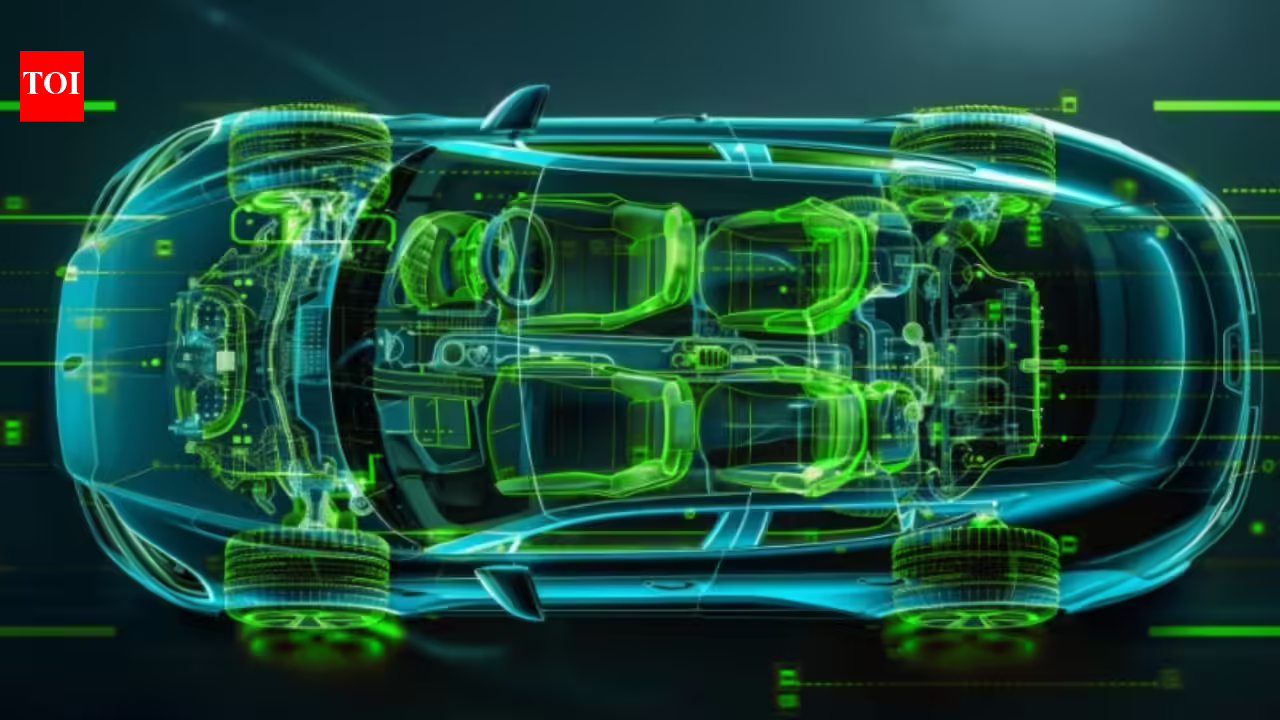
This article is written by Sai Sridhar, Managing Director, Electrobit India Pvt. Ltd. Ltd., CRO – APAC.The automotive industry is at a turning point, and software is now in the driver’s seat. For decades, vehicles were defined by engineering precision, manufacturing scale, and mechanical innovation. That era is over. Today, vehicles are evolving into software-defined platforms, and with it, a hard truth is emerging: Automakers that can’t manage software post-production will struggle to remain competitive.This is why over-the-air (OTA) updates are no longer optional; They are original. In the past, improving a vehicle after it left the factory required expensive service campaigns, dealership visits and logistical coordination. This model doesn’t work at scale in a world where a single car runs millions of lines of code and where customer expectations are shaped by real-time digital experiences. The ability to remotely update, repair, and secure vehicles is no longer a differentiator; This is a basic ability. Speed is now the strategy.In a highly competitive market, being first matters, but staying relevant matters even more. OTA brings fundamental changes to the way vehicles are manufactured and distributed. Automakers no longer need to wait for perfection before launching. Instead, they can bring products to market faster and continuously develop them through software.This shift compresses development cycles, reduces time-to-market pressures, and redefines how innovation is delivered. Vehicles are no longer static products; They become dynamic platforms that grow over time. But the impact goes far beyond speed.OTA updates are reshaping the economics of the automotive industry. Suppliers and OEMs can shift from a “launch-and-forget” mentality to an iterative, lifecycle-driven approach. Non-critical issues no longer delay production. Features may be refined after launch. Performance can be continuously optimized. In fact, OTA enables a more agile, software-driven value chain.For consumers, this change is even more profound. Today’s drivers don’t compare their cars to other cars; They compare them with their smartphones. They expect seamless updates, new features, and improved performance over time. OTAs provide exactly that. A vehicle purchased today is not the same even after a year; It becomes better, smarter and more responsive.This fundamentally changes the ownership experience and, more importantly, the relationship between brands and customers. However, perhaps the most important role of OTAs is in an area that cannot be compromised: cybersecurity.As vehicles become more connected, they also become more exposed. Weaknesses are no longer imaginary; They are inevitable. The question is not whether issues will arise, but how quickly they can be addressed. OTA provides the only scalable mechanism to respond to security threats in real-time across the entire fleet. Without this, it will be extremely difficult to maintain confidence in connected mobility.Regulation is already catching up to this reality. Frameworks such as UNECE R156 are enforcing accountability around software updates across the vehicle lifecycle. Compliance is no longer just about meeting standards; It’s about demonstrating the ability to responsibly manage software at scale. OTAs are central to that capability.Looking ahead, the direction is clear. As software-defined vehicles become mainstream, OTAs will separate the leaders from the laggards. Automakers that adopt it as a strategic capability will unlock faster innovation, stronger customer engagement and more flexible business models. Those who treat it as an add-on will find themselves constrained by legacy processes and increasing complexity.The future of mobility won’t be decided on horsepower or hardware alone; It will be defined by how intelligently vehicles evolve over time. And OTAs are what makes that growth possible.Disclaimer: The views and opinions expressed in this article are solely those of the original author and do not represent the Times Group or any of its employees.
(TagstoTranslate)Over-the-Air Updates(T)Automotive Software(T)Software-Defined Vehicles(T)OTA Update Importance(T)Cybersecurity in Vehicles
