

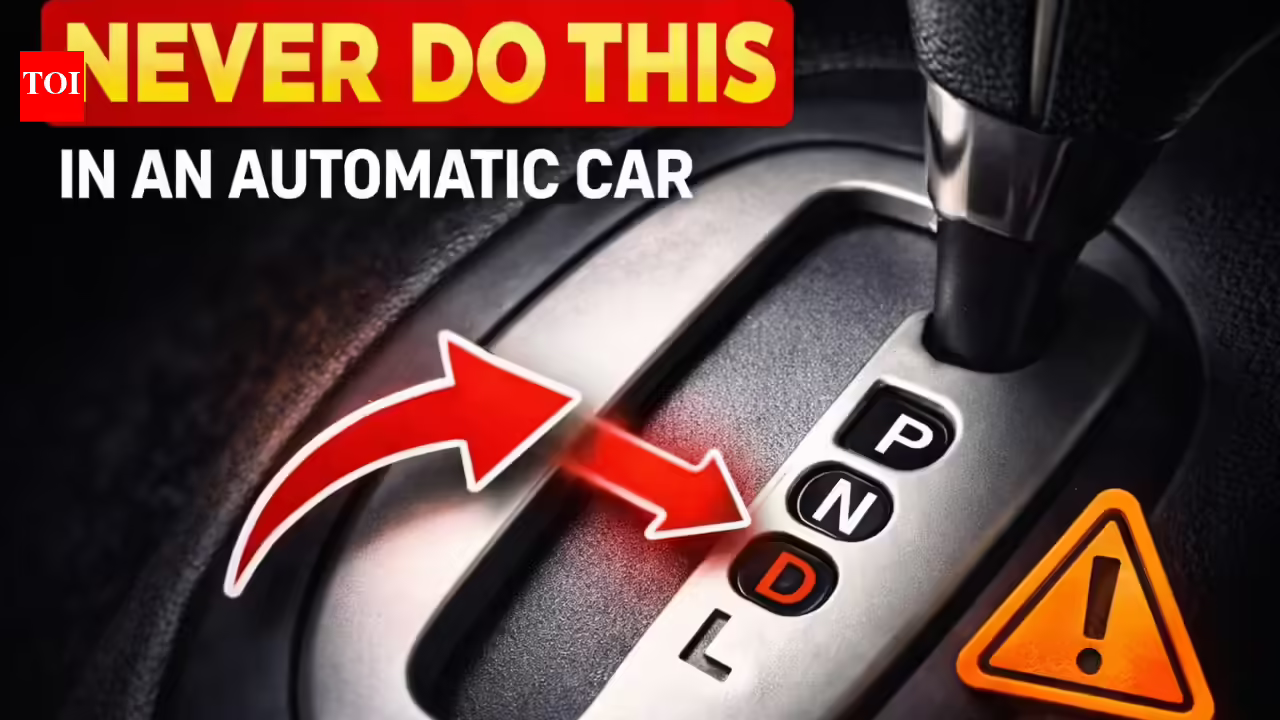
Autonomous cars are gaining widespread acceptance in India, mainly due to the ease of commuting in congested traffic. However, despite their user-friendly nature, automatic transmissions still require proper driving habits. Many motorists make unknowing mistakes that can lead to increased fuel usage, component wear and resulting costly repairs. Gear misuse or poor braking practices can affect transmission health. Knowing how automatics function and avoiding common mistakes helps improve efficiency, reliability and long-term durability.Shifting to neutral at traffic lightsMany automatic car owners move the gear lever to neutral during long stops, believing that this saves fuel or reduces engine load. However, modern automatic transmissions are designed to operate efficiently even when stationary in drive with the brakes applied. Frequent switching between drive and neutral provides little benefit and can increase wear on transmission components over time. Frequent gear changes place stress on internal parts, which can affect smooth operation. In most traffic situations, it is sufficient to put the car in drive and use the brakes.
Ignoring transmission service intervalAutomatic gearboxes rely on transmission fluid for lubrication, cooling, and smooth shifting. As the fluid ages, it deteriorates and contaminants can accumulate with regular use. Skipping scheduled inspections or fluid changes can result in difficult shifts, delayed response and higher operating temperatures. Continued neglect increases the stress on internal components and can lead to overheating or major damage to the gearbox. Adhering to the recommended service intervals helps maintain performance and increases transmission life.Using the accelerator to hold the car on a slopeUsing the accelerator to prevent a car from rolling back on a slope puts unnecessary stress on the transmission and drivetrain. In automatic vehicles, especially those with torque converters or automatic clutch systems, the gearbox is forced to work against gravity while stationary, producing additional heat. Prolonged exposure can accelerate clutch wear, degrade transmission fluid and reduce efficiency. Over time, this can lead to jerky movements or delayed reactions. Using the brake pedal, hill-hold assist or electronic parking brake is a safer and less damaging approach on slopes.Engaging in drive or reverse before the car has come to a complete stopShifting between drive and reverse before the vehicle has come to a complete stop places enormous stress on transmission components. A sudden change in power direction while the wheels are still moving can put stress on the clutch and gears. Repeated use of this practice may result in poor engagement, increased wear and reduced gearbox life. Allowing the car to come to a complete stop before changing gears helps ensure smooth operation and limit long-term damage.Applying the brakes while driving on a slope instead of using engine braking.Continuous braking on downhill sections generates excessive heat, causing brake pads and discs to wear down faster and increasing the risk of brake fade. On prolonged descents, this may affect braking effectiveness and safety. Many automatic cars offer manual modes, lower gear options or hill descent functions that allow the engine to control speed. Using engine braking reduces reliance on brakes, improves control and helps extend the life of braking components.
(TagstoTranslate) Automatic Transmission Care Tips (T) Automatic Car Driving Mistakes (T) Extending Automatic Transmission Life (T) Proper Gear Shifting in Automatic Cars (T) Importance of Transmission Service (T) Common Errors in Using Automatic Cars (T) Fuel-Saving Tips for Automatic Cars (T) Engine Braking vs. Brake Use in an Automatic (T) Automatics in Traffic How to Drive
