

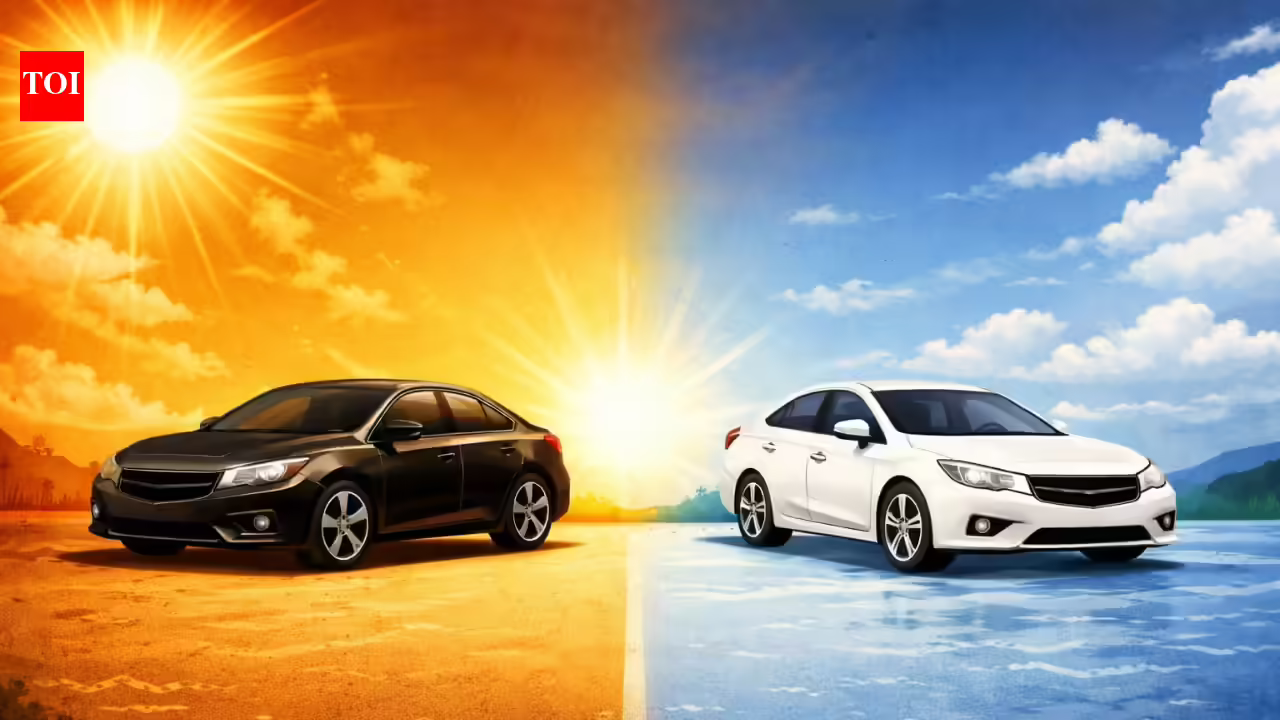
Vehicle color can affect how much heat a car absorbs when parked in direct sunlight, with black and white often being compared for their effect on temperatures. As summer conditions increase, many owners question whether dark colors increase surface and cabin heat levels. Black and white are one of the most common car colors, making the comparison relevant for buyers and owners. This issue focuses on how different colors absorb and reflect sunlight, affecting overall heat generation inside and outside the vehicle.Darker colored cars absorb more heat than lighter colored cars, resulting in higher surface temperatures when parked in direct sunlight. According to studies conducted in hot climates, black vehicles, in particular, register hotter outdoor readings than white cars exposed to the same conditions. The difference has to do with how colors interact with sunlight. Sunlight carries visible and infrared radiation, which produces heat. Dark colors absorb most of the wavelengths and convert them into heat energy, while light colors reflect a large portion of the incoming radiation.
Inside the cabin, the temperature increases mainly due to the greenhouse effect. Sunlight penetrating through the windows warms interior surfaces such as the dashboard and seats, and the trapped heat increases the overall cabin temperature regardless of exterior color. However, research shows that the interior of a black car can still be a few degrees warmer than a white car under similar conditions.Interior decoration also affects heat retention. Darker dashboards and upholstery absorb and retain more heat than lighter materials. In many cases, cabin color and material choice have a greater impact on perceived temperature than exterior color. Features like tinted glass, sunshades, ventilated seats and efficient air conditioning systems play a big role in improving comfort.In practice, the temperature difference between black and white cars can be up to several degrees on very hot days, although both can overheat when exposed to prolonged sunlight. Measures such as parking in shady areas and using reflective windshield covers can reduce cabin heat more effectively than choosing color alone.For buyers in hot areas, light exterior colors may provide limited benefits in heat reduction. However, the difference is not so great as to outweigh other considerations. While black cars generally absorb more heat, overall comfort depends on many factors besides paint color.
(tagstotranslate)general
