

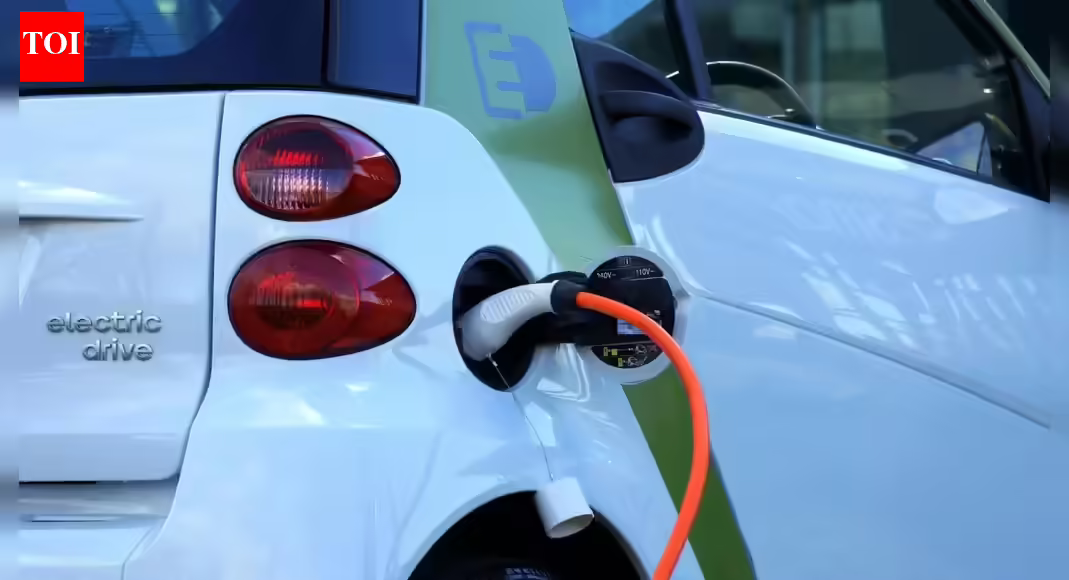
This article is written by Praveen Pothumanthi, Partner, EY-Parthenon.Rare earth magnets are an important raw material in the automotive, defense and electronics industries. In the automotive context, magnets are used in the manufacturing of electric vehicle (EV) motors and other fuel agnostic components such as sensors, braking systems, infotainment speakers, etc. There are two types of rare earth magnets – NdFeB (Neodymium Iron Boron or “New” magnets) and Sm-Co (Samarium Cobalt). Neo magnets are the preferred choice for automotive applications due to their lower price and higher magnetic strength-to-weight ratio than Sm-Co.China has the largest reserves of rare earths at approximately ~44 million tonnes (~50% of global reserves), while controlling ~90% of global rare earth processing capacity. Export restrictions imposed by China on rare earth magnets in June highlighted high supply concentration risks in India, with many EV OEMs indicating production slowdowns. Although restrictions were eased with China allowing exports of light rare earths in August, the underlying risk of potential supply chain disruptions remains.
India also has rich reserves of rare earths estimated at ~7 million tonnes and is involved in the production of Nd (Neodymium)/Nd-Pr (Neodymium-Praseodymium) oxide, a precursor for the manufacture of Nd metal. Currently, due to regulatory constraints and dependence on low-cost Chinese imports, there is a bottleneck in the midstream and downstream with very limited presence of players involved in the manufacturing of Nd metals and then Neo magnets. China’s export unpredictability underlines the urgency for Indian manufacturers and policymakers to accelerate domestic integration, supporting both the EV30@30 target (30% EV penetration by 2030) and the “China+1” strategy to minimize supply chain risk and maximize upstream potential.Currently, ~100% of India’s rare earth magnet demand is met through imports. India imported ~2.3 kilotonnes of rare earth magnets in 2024, of which ~65% came from China, 15% from Japan and the rest mainly from Hong Kong and South Korea. With rare earth magnet demand increasing from ~2 kilotonnes in FY25 to ~6 kilotonnes by FY30, localization of production becomes critical to maximize domestic value addition and support India’s electrification and renewable energy ambitions.
Localization of the Value Chain – Current Barriers:
Raw material ores: India’s rare-earth resources are monazite-based, with lower concentrations of rare-earth elements than China’s bastnasite-rich reserves. Monazite also contains substantial levels of thorium, making it mildly radioactive. As a result, extraction and processing require stringent radiological safeguards and complex hazardous-waste management, increasing both the cost and time involved in the production of rare-earth oxides and downstream materials.Technology: While a certain Indian player has developed indigenous plant and machinery designs, excelled at commercial scale in technology, yield and operating costs, competition with Chinese producers is still unproven. When scaling up the manufacturing process of rare earth magnets from laboratory scale to commercial scale, high quality control and process optimization are required. Regulatory Overview: Since rare-earth minerals are radioactive, IREL (under the Department of Atomic Energy) traditionally leads the development of the field. Recently, the Ministry of Heavy Industries announced a ₹7,280 crore incentive scheme to create 6,000 TPA integrated RE magnet capacity, which includes ₹6,450 crore in sales linked incentives and ₹750 crore in capital subsidy for five beneficiaries (1,200 TPA each). The scheme currently gives priority to financial incentives, while providing limited support in terms of operations and technology.
The way forward – a distant but possible reality:
To realize the full potential of localization of the rare earth value chain, India needs a strategic and multi-pronged approach
technical skills
The government can consolidate the currently fragmented academic and industrial research on downstream rare-earth materials – such as Nd metals, Nd-Pr alloys and neodymium-iron-boron (NdFeB) magnets – by setting up a dedicated National Panel for Rare Earths. An integrated coordination mechanism will align laboratory research with industrial requirements, accelerate prototype development, enable rapid expansion of indigenous technologies and streamline the transition from R&D to commercial manufacturing.With China further tightening restrictions on the export of rare earth magnet manufacturing equipment and technology in 2025, greater attention should be paid to domestic R&D and east-China strategic partnerships with countries such as Japan and the United States that are at the forefront of ND metal and magnet manufacturing. Technology-transfer and cooperation can accelerate industrial capacity building, foster rapid innovation and reduce dependence on the Chinese rare-earth supply chain.
commercialization roadmap
While the new incentive scheme provides strong financial support, it can further accelerate the ecosystem by offering operational enablers to avoid long set-up delays seen in older programs like ACC-PLI for solar cells and Li-ion batteries. This should be complemented by assured, cost-effective access to key raw materials – particularly rare-earth oxides – through structured procurement arrangements with IREL. In parallel, faster environmental clearance, land allotment, machinery and infrastructure support will significantly reduce setup timelines and improve investment attractiveness on all fronts.
circular economy focus
In parallel with strengthening downstream manufacturing, India should prioritize the development of a strong recycling ecosystem for components containing rare-earth magnets, such as motors, audio systems and other automotive components. Establishing efficient collection, dismantling, and material-recovery infrastructure will be critical to enabling a circular economy, reducing reliance on environmentally intensive mining, and creating a stable secondary supply of rare-earth minerals. With timely policy support, India – which is still in the early stages of this field – can establish itself as a global hub for rare-earth magnet recycling and capture significant emerging market potential.India’s rare earth ambitions depend on an integrated effort of technology, policy and recycling. By aligning R&D, targeted incentives and global collaboration, India can not only secure a resilient supply chain but also become a leader in sustainable rare earth magnet manufacturing.Disclaimer: The views and opinions expressed in this article are solely those of the original author and do not represent the Times Group or any of its employees.
