

This article is written by Nisarg Pandya, CEO and Founder, DriveBuddyAI.India’s roads are a paradox of progress and risk. While we build world-class highways, our accident statistics tell a sobering story. One of the most common and preventable incidents is rear-end collision. According to a 2026 report by the Ministry of Road Transport and Highways (MoRTH), 72% of road deaths in India are caused by three major types of crashes: rear-end collision, head-on collision, and collision with pedestrian. In 2024, the death toll rose to 1.77 lakh, meaning about 485 people lost their lives every day.The inconvenient truth is that the vast majority of road deaths are caused by driver errors, in part due to technical and system failures. While India is committed to the worldwide target of halving traffic deaths by 2030, achieving this will require rapid industry deployment, technology and strong regulations.
Understanding the challenge on Indian roads
When we look at the raw data of vehicles plying on Indian roads, the ‘challenge’ is not just about speed; It’s about predicting chaos. In Western markets, the Forward Collision Warning (FCW) system is trained to detect a car that brakes smoothly at a traffic light. In India, the system must interpret a tuk-tuk that suddenly decides to turn right from the left lane, a pedestrian crossing from behind a bus, or a speeding motorcycle filtering between lanes.The technical hurdle is false positives. If ADAS is too sensitive, it will beep continuously at every stray cow or missed overtake, and drivers will simply turn it off. The challenge is not just to locate an object; It is understanding the intent of that object in a heterogeneous environment. We need systems that understand that a person on the side of the road is a potential threat, not just a static object.
How ADAS rear-end stops collision
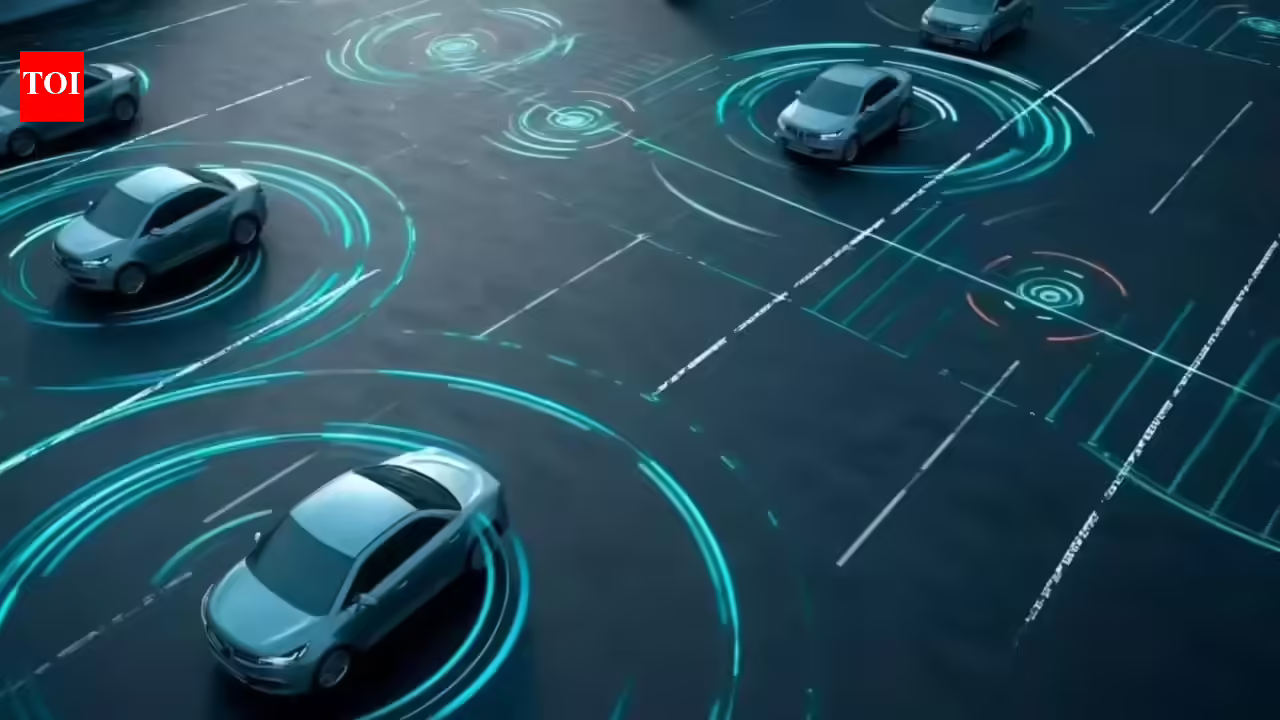
We need to move beyond the idea of ADAS being just a camera. It is a digital co-driver that never gets distracted. It works in three stages:First, environmental perception. Using a combination of sensors, typically a camera and radar, the system is continuously calculating time-to-collision (TTC). It’s not just about looking at the car in front; it’s looking at the car Three Vehicles ahead are observing the ripple effect of brake lights.Second, risk assessment. The system knows that hard braking is a language in India. This differentiates between a ‘traffic calming’ deceleration and an ’emergency’ stop. If the driver’s reaction is too slow based on their current speed and following distance, the system flags this.Third, intervention. The first layer is an audiovisual warning: ‘Warning! Break!’ But the real game-changer is the second layer: advanced emergency braking. AEB works as a form of automatic braking by using radar and camera sensors to sense the surrounding environment and apply brakes as per suggestions from the perception system. This significantly reduces reaction time as the driver does not have to move his foot from the accelerator to the brake; The system encourages deceleration one second earlier. In the world of rear-end collisions, that split second is the difference between a near-miss and a pile-up.
From luxury to national mandate
ADAS has long been a luxury feature. But now the industry is pushing to make it a standard or even mandatory safety net. This is happening because the economics have changed. Hardware that used to cost a luxury car buyer a premium camera and processor is now available at a price that makes sense for commercial fleets and mass-market vehicles.We are seeing changes in passive safety (airbags that protect you) during an accident) to active safety (ADAS, which prevents an accident completely). For a logistics company, a rear-end collision with a truck doesn’t just mean a bumper bust; This means downtime, legal liability, cargo loss and skyrocketing insurance premiums.The mandate for the commercial vehicle industry is coming from 2027. They are one of the biggest adopters of AI-powered camera systems that monitor the road and alert the driver, a better return on investment than paying for an accident. When you look at countries where AEBS (Advanced Emergency Braking System) is mandatory, the reduction in rear-end accidents is dramatic. India’s unparalleled traffic density makes it not just a luxury, but also a necessity for survival on our highways.From January 1, 2027, the Government of India has mandated basic ADAS features, specifically AEB and Lane Departure Warning, Drowsiness Warning, Blind Spot and Moving Off Information System, for all new passenger vehicles with more than eight seats, as well as trucks and buses (M2, M3, N2 and N3 categories). This marks a significant shift from alternative security to basic security. By targeting heavy commercial vehicles, the government is addressing the most dangerous segment of the national fleet and standardizing safety technology for the mass market.
the way forward
The future is a partnership between human intuition and machine precision. We are moving towards a zero-collision corridor.Imagine a highway where every truck and bus is equipped with a system that religiously maintains a safe distance, even if the human driver is momentarily fatigued. These systems can send data back to the control centre, creating heat maps of ‘hard braking hotspot’ areas where accidents are likely to occur, so that infrastructure officials can fine-tune road design or signage.The goal is to standardize a ‘safety score’ for each driver and vehicle based on their ADAS data. This will change the culture from ‘reactive driving’ hitting the brakes to ‘predictive driving’ – tolerating and predicting. It won’t happen overnight, but every rear-end collision we prevent shows how Indian roads can ultimately be as safe as they are wide.Disclaimer: The views and opinions expressed in this article are solely those of the original author and do not represent the Times Group or any of its employees.
(TagstoTranslate)ADAS(T)Drowsiness Warning(T)AEBS(T)Times Group(T)Ministry of Road Transport(T)Blind Spot and Moving(T)ADAS Prevents rear-end
