

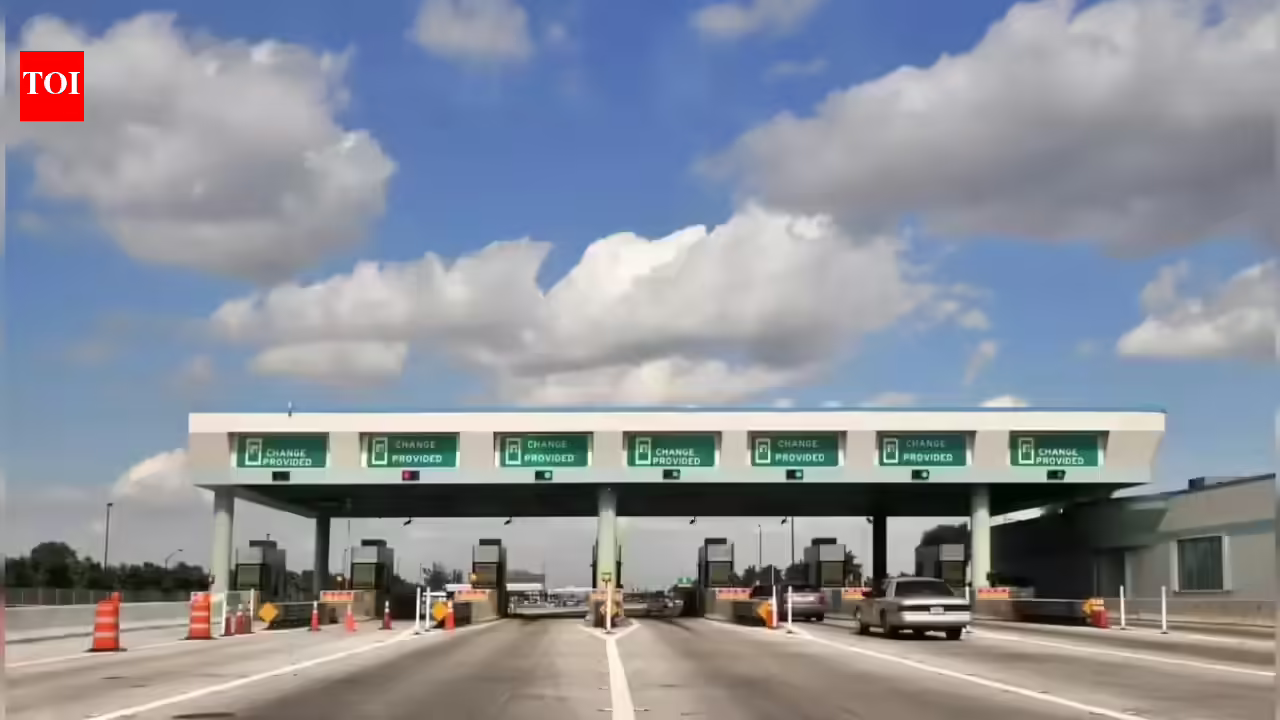
The National Highways Authority of India has issued a warning to motorists using barrier-free toll roads. Manoharpur in Rajasthan and Hyderabad in Telangana are among the first places in India to implement barrier-free tolling on national highways. This new system allows vehicles to pass without stopping at the toll plaza. Under the new system, defaulting on toll payment can result in double the cost if payment is not made within a certain time frame.
Barrier-less toll: how it works
It uses LiDAR technology to detect and identify vehicles in real time as they move beneath the toll gantry. As a vehicle passes, the system tracks it, reads the number plate using cameras, and identifies the type of vehicle based on its size and axle count. It then links this data to FASTag to automatically process toll payments. The objective is simple. No stops, less traffic and faster highway travel.
Why may you have to pay double the charge?
Problems arise if toll is not paid. This could be due to low FASTag balance, inactive tag or tracking issues. In such cases, the system still records the passing of the vehicle and generates an electronic notice, commonly called an e-notice. It is sent to the vehicle owner based on the registration details and serves as a reminder to repay the pending toll.The main rule to remember is the 72-hour period. If the pending toll is paid within 72 hours of receiving the e-notice, the user pays only the basic amount. However, if the time limit is reached, the amount payable is automatically doubled. In simple words, delay beyond this window means paying double the toll.To check and settle these dues, motorists can log in to the official portal managed by the National Informatics Center using their vehicle registration number. Officials have advised users to trust only the official portal to avoid fraud.There is also a provision for creating controversy. If a user feels that the e-notice has been wrongly issued, a complaint can be filed within the same 72 hour period. Failure to act within this period may still result in a fine.
