

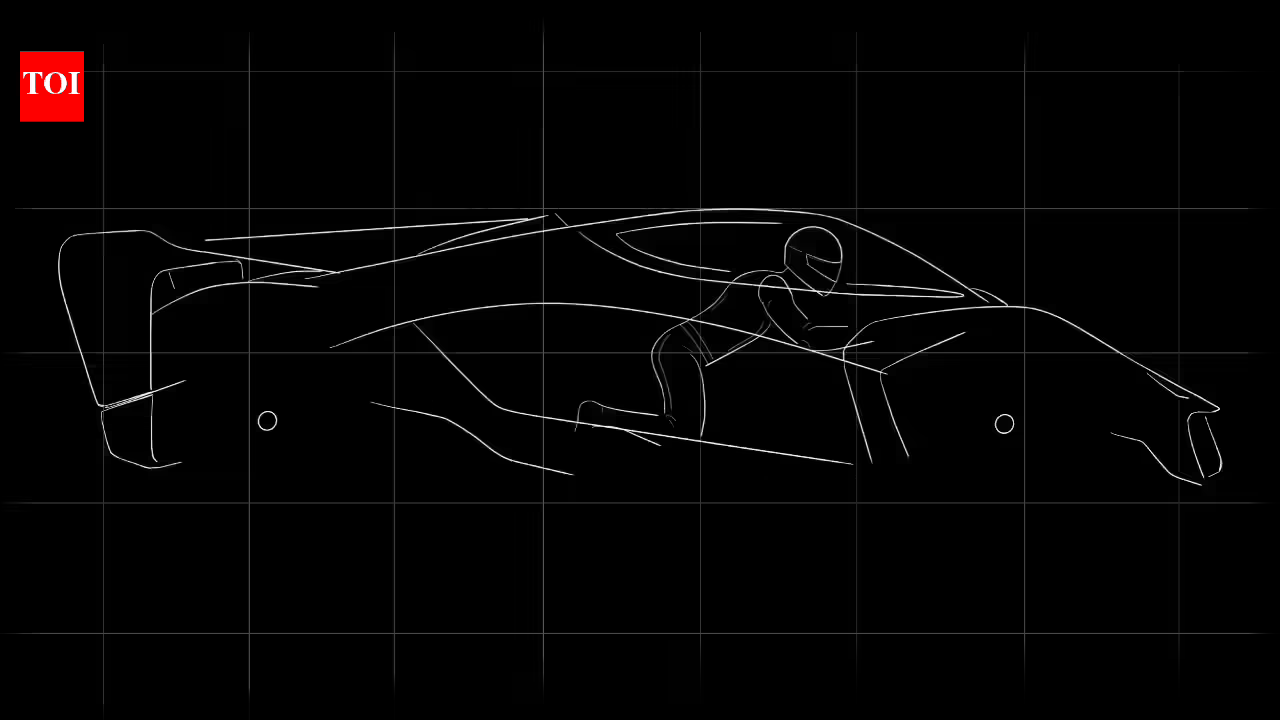
A new hypercar startup is challenging one of the most fundamental aspects of performance car design: where the driver sits. Dutch brand Sanrivati has revealed what it calls “Apex Position”, a head-forward driving layout that aims to create a closer connection between driver and machine.The idea seems simple: move the driver forward, tilt the body and change sight lines. However, the idea behind it goes deeper than that. While modern hypercars continue to pursue higher power outputs, advanced aerodynamics and sophisticated electronics, Sanrivatty believes the driving experience can be transformed by rethinking the driver’s position inside the vehicle. The company says its new concept takes inspiration from high-performance motorcycles, where the rider is more physically connected with the machine and directly connected to its movements.
What is top position?
According to Sanrivatti, the top position puts the driver in a more forward-focused and central position than a traditional hypercar. Most high-performance cars place the driver behind the front axle in a relatively inclined cockpit. However, the new layout takes the driver closer to the action and is designed to improve visibility, vehicle placement and overall engagement behind the wheel.
The company claims that the setup provides a wider field of vision and allows drivers to assess corners and track position more accurately. Its purpose is to make the driver feel more involved during acceleration, braking and cornering, rather than isolated from the vehicle’s movements.SanRivatti founder and CEO Santiago Sanchez Rivero said the idea arose from a simple question: Why does the connection between rider and machine feel more immediate on a motorcycle than in many high-performance cars?He argues that cars do the opposite. Between the driver and the road sit layers of architecture, packaging and tradition. The faster the car, the more the technology mediates the experience rather than enhancing it. The highest status is Sainrivatti’s attempt to bridge that gap. The driver sits more centrally within the vehicle, leaning forward rather than leaning back. The field of vision is wide. Vehicle placement on the track becomes more intuitive. In theory, the driver ceases to be a passenger tied to a very fast machine and becomes an active part of it.Sanrivatti says that prototype development is progressing rapidly and more details about the hypercar will be revealed in the coming months. For now, the company is focused on its central philosophy: designing hypercars around the driver rather than the machine.
